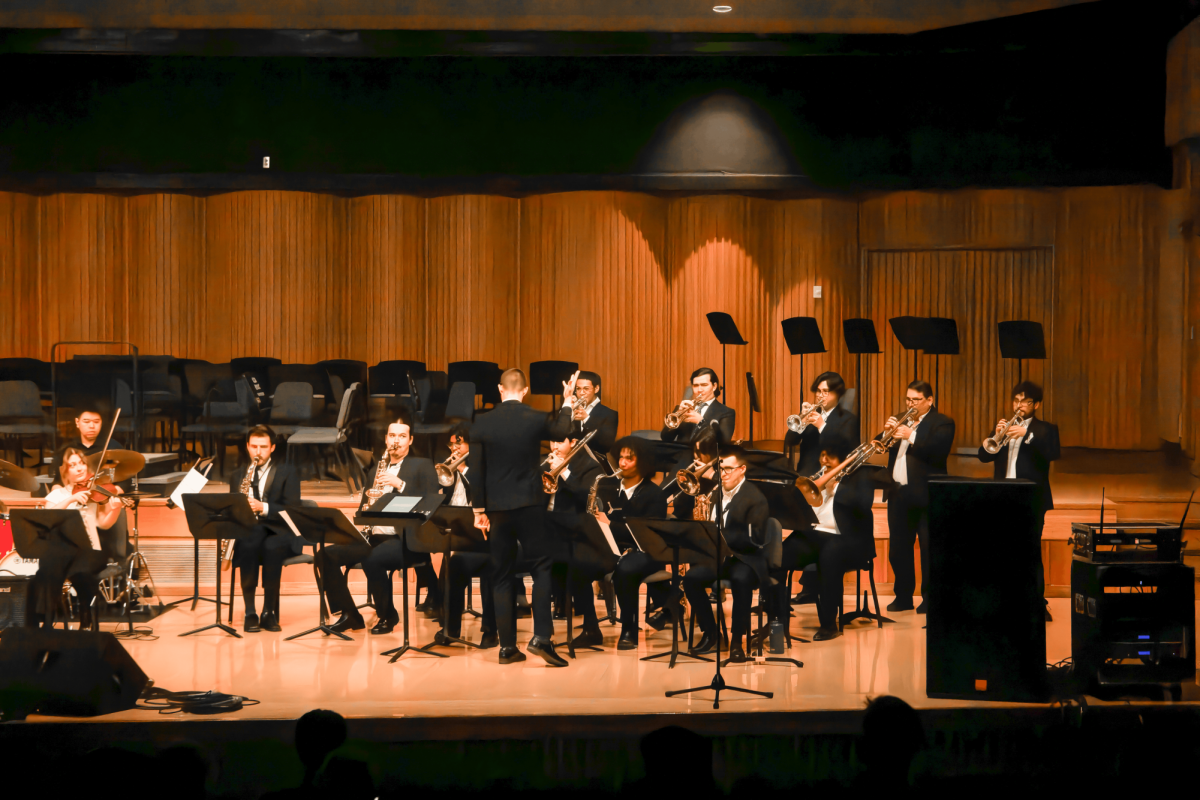


“MOSAIC: School Of Music Variety Show” made its return on Saturday, April 4 at Sacramento State’s Capistrano Music Hall. The event served as a showcase of the assortment of talents in the music program at Sac State, all jam-packed into one afternoon.
“You get such a wide variety of ensembles performing in a short period of time,” School of Music Director Scott Perkins said. “It’s a great way to see all sorts of different kinds of performers and styles of music all at once.”
This year’s return of “MOSAIC” marked the end of a long-lasting hiatus for the event, which was last held in 2017 and ceased to return after the COVID-19 pandemic.
The show opened with a performance of “Ol’ Man River” by the jazz ensemble, which was followed by a sequence of small ensemble and solo performances, ranging from clarinet duets to a 10-member a capella performance by Vox Now.
The event is a compilation of the program’s current work, allowing members of the School of Music program to offer a glimpse into the different shows they are involved in, many of which were excerpts from other concerts or personal recitals.
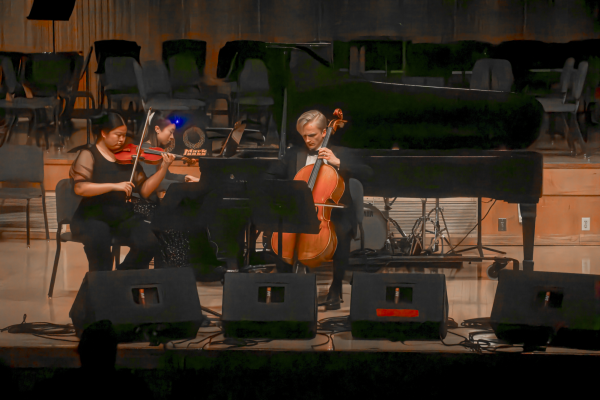
William Masters, a third-year music performance major and cello player, opted into two of these performances, one being a sonata duet with pianist Emma Kolodrivskiy and the other an allegro moderato with Vuletich Trio. He is also a performer in the Sac State Symphony Orchestra.
“The piano sonata I played, that’s actually for a friend’s recital. Sometimes it works out that you play in friend’s recitals to help out,” Masters said. “I’m just amazed at Sacramento. There’s this quality of musicians here, the real deal.”
Some of the afternoon’s performers, such as music performance graduate student Zoë Garcia, have joined the School of Music to obtain a master’s degree.
“After I finished my undergrad, I knew that I wanted to study with [Sac State professor] Robin Fisher,” Garcia said. “I did a sample lesson with her, and I could see how she believed in me.”
Garcia was asked by lecturer Julie Miller to perform a number from her recital and delivered a solo operatic performance of “Mein Herr Marquis” alongside accompanist John Cozza. Her individual recital will take place on April 17.
RELATED: KSSU’s Musical Madness Marathon amps up the quad
The event concluded with a performance from the Sac State Symphony Orchestra, directed by Ryan Murray. Flutist Kiele Miyata, a fourth-year music education and music performance double major, found her enthusiasm for performing through the program.
“I’ve been part of music school programs since I was in fourth grade. When it came time to choose my major, I decided that music was something I wanted to pursue so I decided to go into music education,” Miyata said. “Then, after my first year or so [at Sac State], I found that I really liked performing, so I added on that degree as well.”
Music majors at Sac State are required to enroll in a large performing ensemble course for eight semesters. The orchestra is composed of both class members and volunteers across different years of study and concentrations.
“The most rewarding aspect of my job is to see students grow and to be involved in so many aspects of the program,” Perkins said. “I get to see everybody working together, and the magic that happens when all of our faculty work with our students to put on an amazing overall experience.”
Behind the scenes of recitals and shows, the degree path for students of the School of Music is intense and course-heavy. Students in the program often take upward of 16 courses a semester.
“Music can be very grueling as a major, so you need good people to help you from burnout. I think the community here really helps with a lot of that,” Masters said.
School of Music students are able to work closely with faculty to grow their skills, spending many sessions working one-on-one with their applied teacher. Miyata said she believes the program is composed of some of Sac State’s best faculty.
“They don’t just want you to pass their class, but they’re there for you as a person. I think that’s something really unique,” Miyata said. “They see you throughout your career here, so you really get to build that relationship. There’s definitely a strong sense of community here.”