

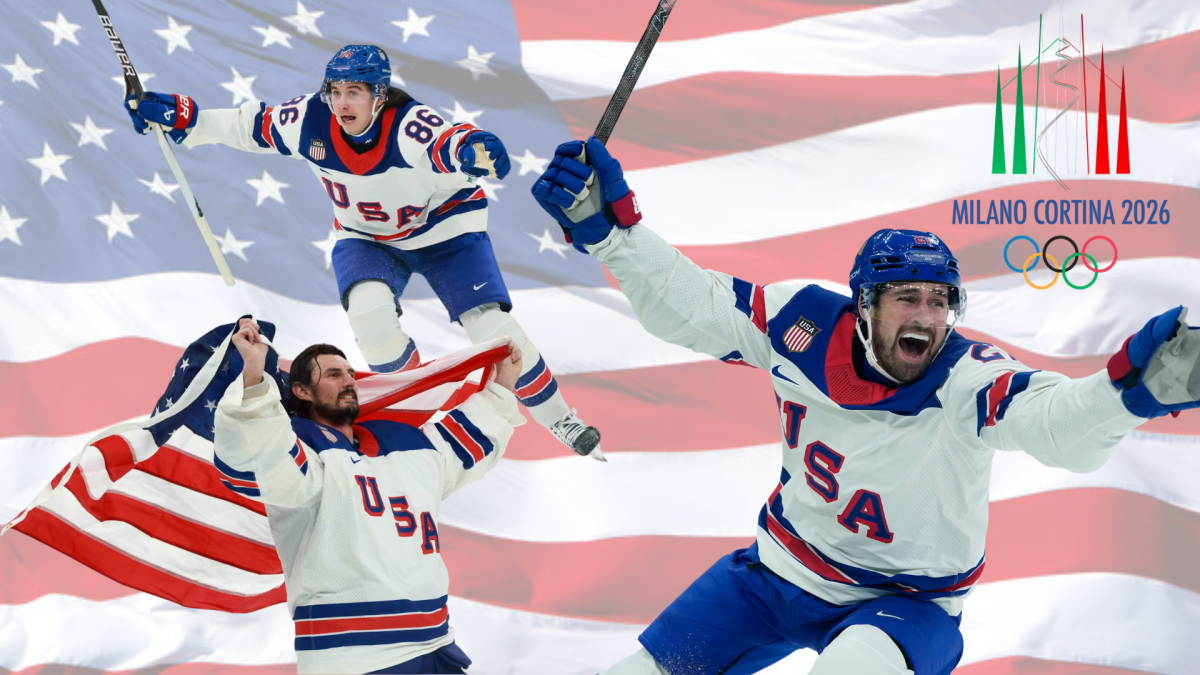
As the United States prevailed over Canada in the Olympic finals for men’s ice hockey during the 2026 Winter Olympics, some were shocked as the game went into overtime and the format was 3-on-3.
In their most historic matchup during the 2010 Winter Olympics in Vancouver, Canada, team Canada prevailed when Sidney Crosby scored the now famous “Golden Goal.” The format then was 4-on-4.
The National Hockey League (NHL) introduced 4-on-4 overtime in the 1999-2000 season, with the aim of getting games to end quicker with more open ice; this was advanced even further in the 2015-2016 season, when 3-on-3 overtime rules were implemented.
Three-on-three overtime saw more success with ending games quicker, with 66% of the games ending in overtime in its first season of implementation, while the last season of 4-on-4 ended in overtime just 44% of the time. This success and the exciting, high-flying style of hockey attracted even more viewers to the fast growing sport.
While the regular season changes often for the NHL, the Stanley Cup playoff overtime format remains the same old game, 5-on-5 until the best team wins, which is why this Olympic format makes no sense.
Why should the Olympics tarnish over 100 years of precedent to ‘make the game more exciting’ or to have it end earlier?
When watching any Olympic sport, you are watching to see the best athletes in the world compete in their sports. The audience wants to know who is the fastest man or woman alive, which country has the best basketball players or who is the fastest swimmer on the planet.
Imagine if Michael Phelps, instead of swimming 100M, only had to swim 50M to save the audience’s time.
No sport should have its history and integrity changed for an audience.
The Olympics represent the best of the best, yet Olympic ice hockey changes its format for the viewer. Four-on-four is acceptable, but 3-on-3 feels criminal.
Three-on-three hockey can be a crapshoot. It is a cheap version of a premier product. Any team with a lucky break can score the winning goal, it becomes more of a game of luck than skill. Why on earth would anyone want the best athletes in the world to compete in a more luck-based game than one they have played growing up their whole lives?
Even in the gold medal game this year, Canadian players Connor McDavid and Cale Makar were caught in the offensive zone as the Americans scored the game-winning goal on a 3-on-1. This example alone shows the inconsistency that 3-on-3 hockey brings to the game.
One of the greatest hockey coaches of all time, Jon Cooper, who has won two Stanley Cup championships with the Tampa Bay Lightning and is the Canadian national team head coach, agrees.
While he is not using the format as an excuse for why team Canada lost, he clearly understands that changing the nature of a game for the audience makes it an entirely different game.
“You take four players off the ice, now hockey’s not hockey anymore,” Cooper said to The Hockey News. “There’s a reason overtime and shootouts are in play — it’s all TV-driven to end games, so it’s not a long time. There’s a reason why [3-on-3] is not in the Stanley Cup final or playoffs.”
Hockey is one of the fastest-growing sports in the world, but changing the format degrades the sport itself.