
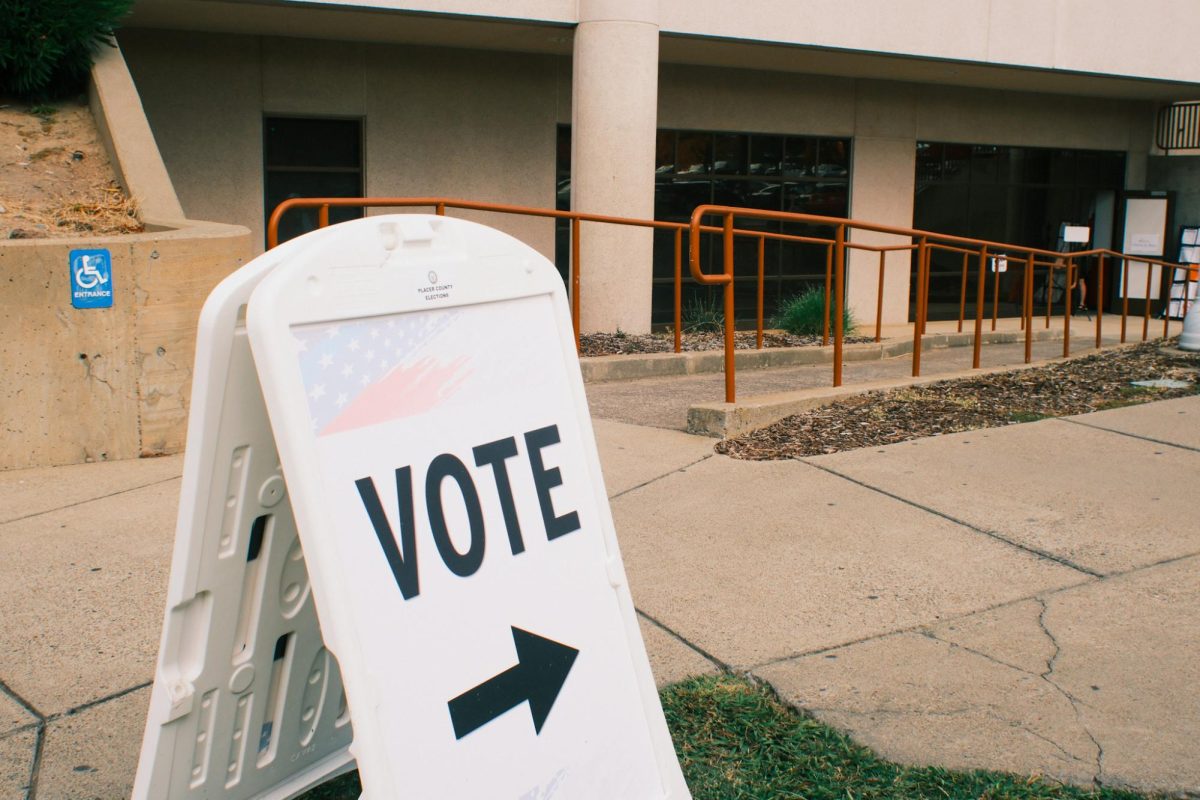
California passed Proposition 50 in a landslide on Nov. 4. The bill authorizes purposeful redistricting to California’s congressional district maps in response to Texas’ partisan redistricting, which was signed into law in August. The new map will create five new Democrat majority districts across the state.
The redrawing of congressional boundaries will be temporary and will revert to the usual nonpartisan committee after the national census in 2030. The redistricting serves to counteract congressional changes in Texas, which created five new Republican majority districts.
RELATED: What is Proposition 50? A guide to California’s special election in November
Prop 50 passed with more than 60% of the vote being in favor of the redistricting. Currently, official reports state the total number of “yes” votes reached just over 5 million. The exact number will not be available until certification on Dec. 12, 2025 and will take effect immediately.
The California Faculty Association, a major supporter of Prop 50, had called upon Californians to vote for the proposition, stating that President Donald Trump will manufacture control of Congress by gerrymandering in other states if the proposition were to be defeated at the ballot box.
“Donald Trump and this congress have thrown out the rulebook and are planning to redraw congressional lines to divide us and amass their own power,” the CFA said in a statement on their website.
Earlier this year, Trump urged Republicans in Texas to redistrict in order to help maintain their current majority in the House of Representatives.
Hours after the “Democrat sweep” Tuesday night, President Trump took to Truth Social, claiming that the redistricting effort was “unconstitutional.” He also claimed that investigations into California’s use of mail-in ballots would be launched.
Elaine Bernal, the associate vice president of Lecturers, South at the CFA, said they saw Prop 50 as an effort to push back against an increasingly totalitarian government.
“I think the framework that we’re coming from is that this is what it means to fight fascism,” Bernal said.
Bernal said that part of their reason for supporting Prop 50 was due to disagreeing with Trump’s self-described “deportation operation.” Bernal explained how immigration control had affected their own community in northern Long Beach.
“We’ve literally had ICE come to our neighborhood every single week,” Bernal said. “At least two to five people were arrested by ICE agents at our local Home Depots and our local car washes.”
Joshua Daniel, a junior philosophy major, had recently transferred from Sacramento City College this semester. He is currently serving as the treasurer for the Sac State Chapter of Young Democratic Socialists of America on campus. He described Prop 50 as another form of gerrymandering but reluctantly felt it was needed in order to maintain democracy.
“Unfortunately, my view on it is that we’re being forced to choose, on a grand scale, between red gerrymandering and blue gerrymandering,” Daniel said.
Gerrymandering is a partisan political practice that involves drawing congressional district lines to carve out large partisan strongholds and prevent an opponent from being the majority in a given district. Critics of Prop 50 argue that California’s attempt to counter Texas’ redistricting is partisan gerrymandering, as it eliminates five Republican majority districts from the congressional map.
Some students, such as Daniel, are concerned over the passing of Prop 50. Ulysses Figueroa, a junior history major and another transfer from Sac City College, had a more optimistic outlook.
“I really think that it’s good because it’s opening up the discussion for gerrymandering in general and how we process our votes in this country,” Figueroa said. “It’s opening up for people that aren’t really aware of gerrymandering to start learning about it.”
Figueroa said the passing of Prop 50 is the spark for a larger, nationwide conversation about how we draw our congressional lines. He said it serves as an opportunity to both educate the public on government function and an opportunity to discuss improvements to the system.