


Sacramento State propped up a range of African artists, from musicians and dancers to artists and acrobats, at the “Black History Month Exhibition” on Thursday, Feb. 12 in the University Ballroom.
The day-to-night event was sponsored in collaboration by Sac State’s UNiQUE and Black Honors College, featuring two main exhibitions.
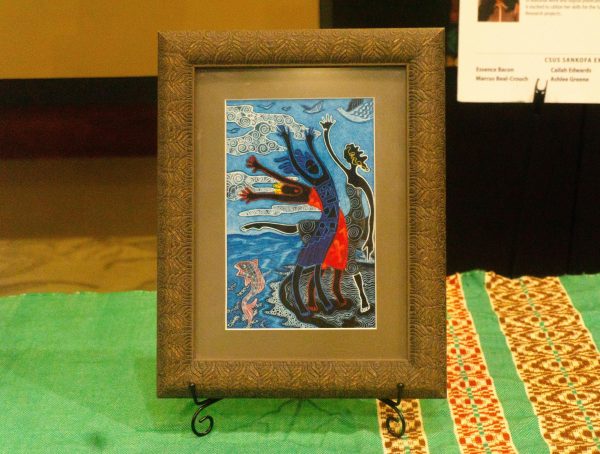
The daytime exhibit was “Sankofa Stories: We Are Because We Remember,” an art gallery featuring 30 works from throughout West Africa. The gallery showcase was presented by the Sankofa Research Team, a student-led organization, in partnership with the university’s Ethnic Studies Department.
Sankofa is a Ghanaian principle that means to reach back and fetch it, originating with the Akan people of West Africa. Among the artwork were paintings, masks, pottery, baskets, instruments and other traditional artifacts.
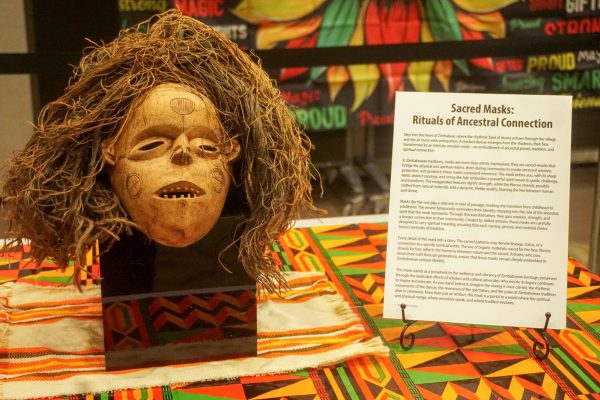
The team is led by Clarence George lll, an ethnic studies professor at Sac State. George talked about the significance of these works and why it is important to reflect on their place in African history.
“Each item carries within it the voice of its origin, the hands of its maker and the context of its use, all of which provide invaluable insights into the lived experiences of African peoples,” George said.
During the night portion of the exhibition, two African performance groups, the Chinyakare Ensemble and the Zuzu African Acrobats, hit the stage.
The Chinyakare Ensemble, an Oakland-based performing arts group, showcased colorful and powerful energy through the traditional music, dance and culture of Zimbabwe.
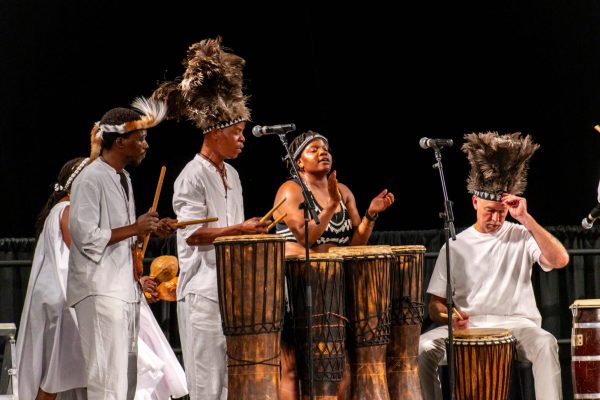
The band shuffled between playing different instruments, like ngoma drums, while the dancers used their physicality and shaker anklets to contribute to the musical ensemble. In addition, the entire group sang and shouted in Shona, a Bantu language spoken in Zimbabwe and other parts of Africa.
The interpretive choreography included intricate hip movement, stomping, jumping and utilizing props such as baskets, pots and flowing garments to tell their story. They danced on a board which created loud thuds and a reverberating sound that resonated throughout the ballroom.
Julia Chigamba, founder and director of the Chinyakare Ensemble, and dancer DeLisa Branch-Nealy talked about the spiritual and traditional origins of their performance style.
Chigamba said she came from a family of musicians who played traditional songs to call to their ancestors and seek guidance. She named the group “Chinyakare,” referring to returning to the old-school way of doing things and going back to their roots.
“It’s not just to play; it’s for healing, praying for rain,” Chigamba said. “When I’m on stage, it’s the place where I feel free myself. When I see people, they are like medicine to me. It gives me strength.”
During one song, the dancers carried clay pots filled with water on their heads. Traditionally, this serves as an act of welcoming guests.
“We use water because everybody needs water. When you don’t have it, you don’t have life,” Chigamba said. “Back home, when we do this, it’s shared around in the circle and everybody gets a sip.”
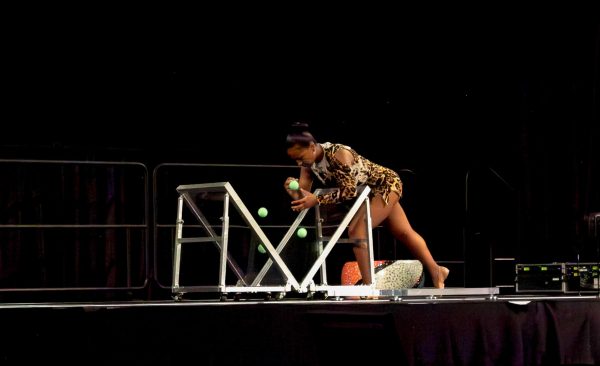
After the Chinyakare Ensemble provided a spiritual experience for attendees, the Zuzu African Acrobats flipped the crowd into a cheering frenzy with a high-energy routine.
The group fused music and vibrant acrobatics to deliver a dynamic performance. The routine was dense with intricate tricks and balancing. It also featured several segments including juggling, hula-hooping and disc spinning.
Ajamu Lamumba, UNiQUE’s program adviser, said it is important to acknowledge Black history and educate people during Black History Month.
“Black history is American history, they need to be taught together simultaneously,” Lamumba said. “However, in today’s society many of the contributions produced by Black Americans and many other ethnic groups in America have been omitted from the history books.”
Exhibitions can shine light on hidden history and bring it to the front of the audience’s minds. The “Black History Month Exhibition” allowed African American attendees to reconnect with their roots and open doors for those unfamiliar with the extent of Black culture to see a unique perspective on Black history in an informative manner.
“It makes all Americans smarter, more aware of the contributions from members of the African American community,” Lamumba said. “To know that African American people have overcome hundreds of years of inhumane treatment to make thousands of historical contributions for centuries.”
Chigamba spoke about cherishing the opportunity to showcase Zimbabwean music and dance to an unfamiliar audience.
“We welcome you as who you are, whatever you’re carrying, we’re here for you,” Chigamba said. “They could have been somewhere else and they chose to be here. That’s powerful, respecting people’s energy and spirit.”