

What happens when a “Survivor” geek gets stranded on an island with their overbearing boss? Beautiful chaos ensues. Sam Raimi’s “Send Help” sends you on a nonsensically crazy and unpredictable journey for nearly two hours.
Rachel McAdams plays Linda Liddle and does a fantastic job playing an underappreciated office worker who is disliked by her peers. We follow her through her journey of discovering her own self-worth and sticking up for herself. McAdams brings Liddle to life in a unique way, with the audience never knowing Liddle’s true intentions behind the actions she does throughout the movie.
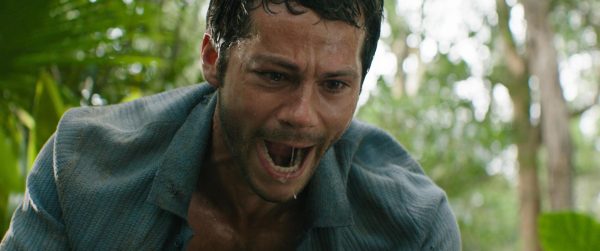
Dylan O’Brien plays Bradley Preston who is a snobby, mean and apathetic nepo baby who has been pampered all his life and takes advantage of those around him. O’Brien does a stellar job with his facial expressions, especially during humorous segments, where O’Brien portrays exaggerated, cartoonish emotions.
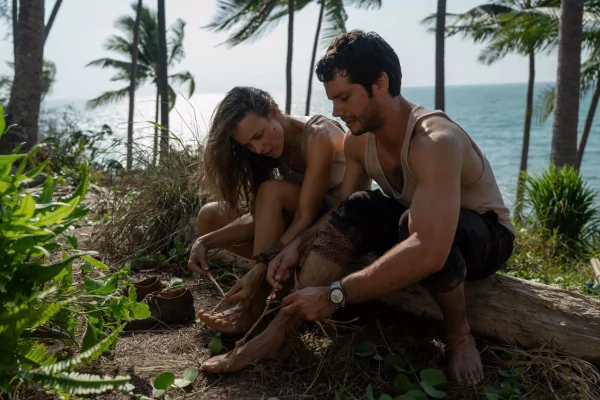
Following these two characters’ journey is a wild ride. One moment, both characters hate each other, and in the next, they share a moment of vulnerability. As the viewer, both characters do a compelling job of hiding what they truly desire even when they are trying to be unguarded. Bradley’s facial reactions visibly imply wanting to return to his privileged life, where he can continue his own cycle of abuse and manipulation, while Liddle outwardly expresses finding herself in bliss by finally living out her survival fantasy, much like the show she holds so dearly.
The music and ambience used throughout the movie added another level of intrigue and mystery. The soundtrack utilizes synths and ambient sounds to convey how isolated the characters are, both literally and mentally, highlighting that neither protagonist truly understands the other’s perspective. They both maintain a facade to benefit themselves, creating a grey area where it leaves you questioning who the true antagonist really is.
Towards the climax of the movie, Liddle makes a decision that completely shatters your perspective of how far she was willing to go to keep her dream alive. Raimi does a convincing job at showing how the environment impacts the characters. Bradley and Liddle begin to revert into more primal versions of themselves.
The hardships of having to survive off the land by eating whatever they can catch and cook dwindles their sanity. Slowly, Liddle’s experience and prior knowledge create a power imbalance between the characters, forcing Preston to adapt to the new environment and take the predicament they are in seriously.
After the protagonists get comfortable, the island itself becomes its own character. The island’s natural predators and fauna create obstacles that Liddle and Preston have to work with. The Island’s natural environmental factors impact the narrative by displacing the characters and demoralizing them with tropical storms, destroying what they have built up to that point. It creates a “man vs. man vs. nature” dynamic that adds to the movie’s conflict of what a monster truly is.
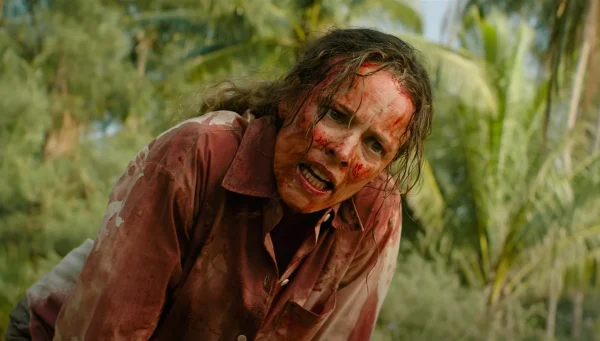
The practical effects for the movie are done phenomenally, creating many messy and gross scenes that leave you reeling in disgust and cringing at the obscenity of the scenarios. The film plays into exaggerated gore, including scenes where the viscera of wildlife is sprayed everywhere. Nothing is safe from the fake blood used on set.
RELATED: Chills and thrills: Five ghostly good horror movies
No matter how macabre some scenes tend to be, the film does a fantastic job at contrasting it with the set design and setting of the film. The sets are beautiful and emphasize the trouble in paradise trope. Set on a remote island in Thailand, viewers are subject to the beauty and wrath of nature. Stunning plant life engulfs the characters at times and beautiful shots of the landscapes with cliffs and waterfalls bring the setting to life.
The most lackluster aspect of the film are the digital effects. Some scenes are overtly obvious in that certain subjects are completely digital, but this is made up for with well-placed practical effects. For example, one particular scene uses blood and gore to bring a clearly CGI-rendered boar to life. Although the digital effects are subpar, Raimi’s mix of practical and special effects help make scenes cohesive, comedic and tense.
Although the opening scenes were slow, the film really kicks it into high gear following a disastrous plane crash. Raimi pulls you into an adventure that feels friendly and predictable at first, before the film’s protagonists slowly begin to change, and the real horror of human nature and greed bleed through. Overall, the movie balances horror and comedy; it leans slightly towards comedic scenes but uses gross and shocking segments to keep you on your toes and engaged.
The finale leaves off on an ambiguous note, leaving it up to the viewer to decide if it was a “good” ending or not. The movie is great for viewers looking for a fun, yet intense and unpredictable film.