


Crude, yet bold. Intentional, yet overtly ironic around the edges. “Piss In The Wind” is held back by its impartiality.
Shrouded in a faint, everchanging mix of recognizably soft lo-fi ballads and fresh, sonically distorted requiems for love, alt-pop singer Joji released “Piss In The Wind” last Friday with an intention of averting from his acoustic-heavy roots. As sincere as the themes feel throughout the record, most tracks come off as a milquetoast attempt at departing from what the artist was known for, as it simply lacked the confidence to do so.
Like all previous records featured in Joji’s discography, listeners are subjected to an endless array of downtempo instrumentation riddled with the same rose-tinted angst that previously brought us breakout singles like “Glimpse of Us” and “SLOW DANCING IN THE DARK.” However, only a few from Joji’s latest record exhibit the same heavyset authenticity that made these singles (ashamedly) easy to resonate with.
“PIXELATED KISSES,” the first single to have dropped prior to the album’s release, is punchy and refreshing, but brief. Wholly swallowed by grainy, distorted synths, expectations are set high. Vocally speaking, it isn’t the most complex of the singer’s repertoire, but makes for a heavy introduction by assuming a tone that is comparably more intense and cathartic than the rest of the album.
RELATED: ‘Man’s Best Friend’ is a chronically single girl’s best friend
With such an abrasive introduction, listeners are expecting to find themselves bathing in the same high-energy boom lingering from the first track, but are instead stalled by lo-fi ballads that are far too stripped back to exert a tone of the same value. “Cigarette” and “Last of a Dying Breed” play like misplaced background tracks from 2020’s “Nectar,” leaving a puzzling taste in the mouth that feels somewhat inconsistent and underwhelming.
Listeners find themselves in a tonal median that is equal parts brooding and calm, which carries itself nimbly throughout a greater portion of the record. The spacious and swirling “LOVE YOU LESS” makes no exception, but does so in a way that makes itself special through a perceivably foreign variety of instrumental and thematic details.
The track breaks free from Joji’s drum sample and electronic-driven production, venturing into the use of laid-back drums and the cyclical tremolo of layered guitars and reverb effects. Altogether, it spirals into a likely homage to My Bloody Valentine’s “Loveless,” right down to its title. Conceptually, it deviates from his previous work and calls for an entertaining double take for shoegaze fanatics, but ultimately maintains a level of execution that is played too safe and redundantly streamlined to be considered groundbreaking.
The rest of the record seems to be in conflict with itself, pushing and pulling away at musical intonations, production and styles that would otherwise leave characteristic imprints sprinkled over every melody.
On one side of the memorability spectrum, “Past Won’t Leave My Bed” offers a cinematic piano ballad that explodes into a dramatic chorus before winding up once more for the latter half. It lurches at listeners, grabbing hold of them as it moves along naturally. Guitars and drums revisit the chorus with newfound density, almost as if the instruments were made to evolve through the progression of the track, animating it.
On the other end is a stewing amalgamation of more lo-fi, drum looped ballads that bleed into each other in an unidentifiable fashion. They sink into the album, becoming lost before tracks like “Sojourn” shock listeners with uptempo, synth-heavy beats – a rarity in the album. The abrupt blast of gain and tempo come across as nothing but a cheap shot at reengaging lost listeners rather than an opportunity to further experiment with the harsher sounds present at the beginning of the record.
The record also features R&B and rap artists Giveon, 4batz, Yeat and Don Toliver, who share varying degrees of contribution in each of their tracks. Giveon, featured in “Piece of You,” and Don Toliver, featured in “Fragments,” each command their verses and are accompanied by instrumentals that are stylistically reflective of their own projects – sometimes overwhelmingly so.
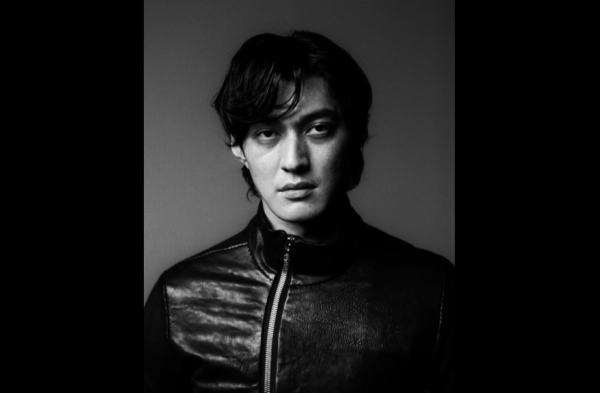
Besides its long list of imbalances, Joji’s “Piss In The Wind” upholds the real intention to distance itself from the musician’s inescapably naive styles, much in the same way that the record was marketed. Joji himself isn’t present; he relies on a personal conduit as a means of expression and contact with the world around him.
The album title itself speaks volumes of the heaving boulder of irony seeped within its immature, pitiful themes, almost as if the main intent was to have the project be the last bag of half-worked and overused ideas labeled to be thrown out before starting a clean slate. Perhaps it is by then that Joji finds himself untethered by the constraints of his past, composing an album far more daring and authentic to his current ideas.