

LGBTQ+ students have faced federal challenges to their civil rights this year, and Sacramento State’s PRIDE Center said it hopes to alleviate their stress.
Students can visit the center on the second floor of the University Union to utilize its kitchen, wardrobe and library. The PRIDE Center also offers academic advising in person on Mondays and virtually on Thursday mornings.
LGBTQ+ individuals are at a statistically higher risk for suicide, substance abuse and mental health disorders, according to the National Alliance for Mental Illness. According to the Trevor Project, one in three LGBTQ+ college students seriously considered suicide in 2022, and 7% have reported a suicide attempt.
LGBTQ+ adults are nearly twice as likely to experience a substance use disorder, and LGBTQ+ youth and young adults are also 120% more likely to experience housing insecurity.
Additionally, President Donald Trump has put out recent actions against the LGBTQ+ community. According to the Gay and Lesbian Alliance Against Defamation, Trump has made “419 attacks against LGBTQ people” before and during his presidencies.
Trump has been vocal about his efforts to end diversity, equity and inclusion initiatives on college campuses. He recently offered the Compact for Academic Excellence in Higher Education to nine universities, which would secure them funding in exchange for curbing DEI initiatives and removing gender neutral bathrooms. All but two universities rejected this offer.
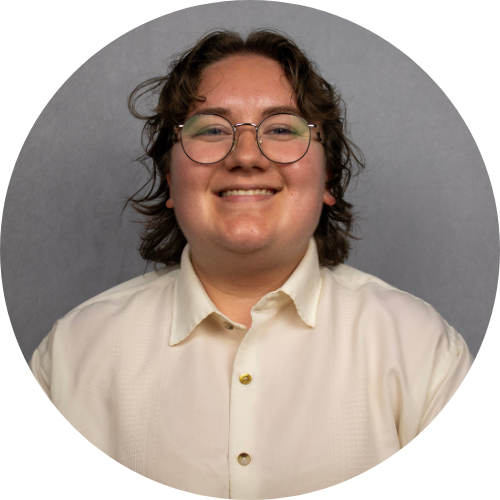
Caspian Woodward, a transgender man who received his psychology degree this May, says the Trump administration’s efforts have led him to hasten some milestones in his transition. Woodward said that he began preparing for gender affirming surgery and his legal name change process as soon as Trump was elected.
“Under previous administrations, I felt like I had all the time in the world to get to it – when I felt like taking six to eight weeks off of my life to get [gender affirming] surgery,” Woodward said. “Some aspects of my surgery did not go as smoothly as maybe they could have if I had more time to plan.”
Before the Supreme Court decided not to reconsider the legalization of gay marriage, Woodward shared that he and his partner were considering getting married in preparation. The possibility worried LGBTQ+ Americans like Woodward, who said he has seen legal action repeatedly taken against individuals like himself by the Trump administration.
Many of these actions have been focused on higher education. A proposed $1.2 billion settlement between the University of California Los Angeles and the Trump administration would eliminate DEI initiatives and prohibit the UCLA School of Medicine from providing gender-affirming care.
The proposed settlement would also require the university to prohibit transgender women from participating in women’s sports in accordance with Executive Order 14201, which made allowing transgender women’s participation a Title IX violation.
RELATED: OPINION: Sac State must act boldly and transparently to support DEI
The Trump administration’s actions have drawn media attention to LGBTQ+ individuals, which Woodward said has impacted his mental health.
“The news is just a constant drain. You want to believe that when you’re in school, you see that light at the end of the tunnel, but I can’t even trust that I’ll be able to stay in the country,” Woodward said.
Woodward said that while he has been worried about the state of the nation, he feels largely supported by Sac State and its faculty.
“Fortunately, as a psychology student, most of my professors understood,” Woodward said. “I even feel like the ones who didn’t really understand what it meant to be trans understood that, right now, I and every other trans student were going through a lot.”
Sac State was ranked the second-most diverse school in the Western United States by the Wall Street Journal in 2023.
Among Sac State’s 13 student support centers is the PRIDE Center, led by Director Hei Fok.
“I hear feedback from students visiting the [PRIDE Center] that they feel like they can be themselves while they are here, and sometimes when they are outside of the [PRIDE Center] they feel like they have to act or behave a little bit differently and hide parts of themself,” Fok said.
Fok said that the PRIDE Center provides a comfortable space for LGBTQ+ students and an educational space for others, such as its Rainbow Ally Training programs.
“We also have faculty scholars this year, which is new to all the academic resource centers, as well,” Fok said. “There are four of them, and they are doing different kinds of workshops on how to apply for grad school, putting portfolios together, research skills and things like that.”
The PRIDE Center can also aid students in completing campus name-changes, acquiring access to Hormone Replacement Therapy and connecting students to gender affirming voice training at the Maryjane Rees Center.
The PRIDE Center regularly hosts events throughout the academic year, which are announced on the PRIDE Center’s Instagram page. This semester, the PRIDE Center held its annual PRIDE Week, which included a PRIDE Resource Fair and a drag show in collaboration with UNiQUE Programs. They also held events for Transgender Awareness Week and are preparing for Queer Prom in the spring and the Sacramento Pride March in June.
Fok said that the PRIDE Center may also have a booth at the Sacramento Pride Festival. Inclusive engagement assistant Dylan Molina said anyone interested in participating should reach out to the Division of Inclusive Excellence by email.
Sac State also has support groups for LGBTQ+ staff and alumni. The Lavender Alumni Network provides events for LGBTQ+ alumni to find community and is looking for someone to serve as their Network Liaison. Queer and Trans Faculty and Staff is an on-campus organization committed to empowering LGBTQ+ faculty and staff through community building and activism.
QTFAS board members Tyler Kriletich and Kate Wallace, both Sac State employees, attended the PRIDE Resource Fair in October to show support and encourage staff to attend the group’s events. Kriletich and Wallace said QTFAS is open to all Sac State employees, and has members from many departments.
“We provide a community on campus because a lot of us are the only queer people in our department, which can be a little isolating sometimes,” said Kriletich.
QTFAS is one of 14 Employee Resource Groups funded through the Division of Inclusive Excellence. ERGs can bring the concerns of faculty and staff directly to the President’s Cabinet, according to Kriletich.
“One of our other members described us as a ‘squeaky wheel on campus,’” Wallace said. “If we see something that we think is not right on campus that we think needs to change, we can bring it up and try to get things changed around here.”
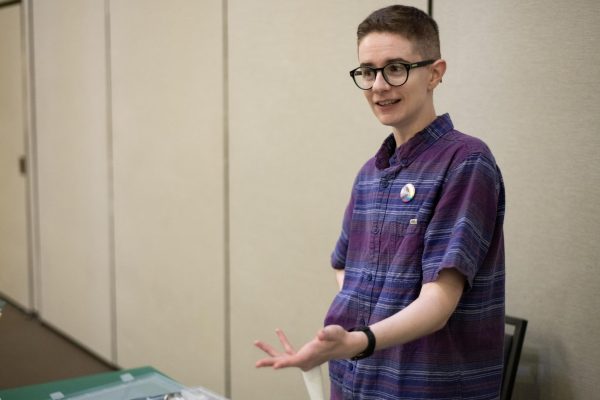
Kriletich said that he has some concerns that federal actions against DEI initiatives and current federal investigations into the CSU may impact QTFAS’s funding. Wallace agreed with Kriletich, but said that they feel safer because of support from President Luke Wood.
RELATED: BREAKING: CSU system faces federal allegations of antisemitism over hiring processes
“I don’t see it as very legitimate, and I don’t think it will all pan out in court, because a lot of this stuff is vital to campus,” said Kriletich. “We’re one of the most diverse campuses on the West Coast, and variety is the spice of life.”
Fok said that, while he is worried about what is happening on campuses in other states, he feels secure at Sac State.
“There’s always a sense of worry, but I think that I’m also a little exhausted by the ongoing threat,” Fok said. “In terms of whether or not this might impact the PRIDE Center, I have pretty good trust and faith in our support from our school.”
The Trump administration’s anti-DEI efforts created similar concerns in the Women’s and Gender Studies Department when Sonoma State University’s WGS department closed earlier this year. Sac State Women’s and Gender Studies Club Officer Frey Monday said that the club’s connection to Sac State’s WGS Department makes it invested in the success of the department.
“Ideally, our club would be assisting and supporting the outcome of any budget cuts and how that affected our department,” Monday said.
Many WGS classes are interdisciplinary and offer opportunities to examine the impact of gender on different areas of study. Monday said that the club and his KSSU radio show, The Talking Circle, provide a space for students to dive deeper into their classroom discussions.
“Our club was born out of people wanting to be able to continue discussions,” Monday said. “We started that show as a way to create an extension of the in-person events that we host.”
Monday said The Talking Circle is generally on KSSU on Mondays at 12. The WGS Club plans to continue hosting monthly meetings, the first of which happened in Tahoe Hall 1002 on Oct. 1.